
Traceability for Fresh Produce: What EU Buyers Actually Need
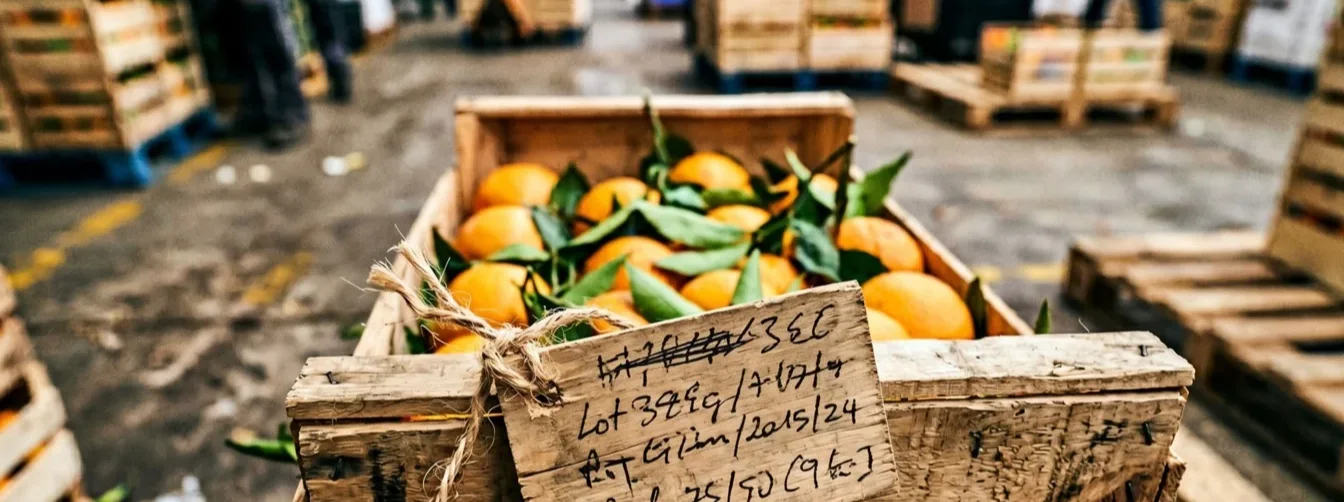
EU Regulation 178/2002 — the General Food Law — requires every food business to know "one step back, one step forward": who they bought from, who they sold to. For fresh produce, that translates into farm-of-origin and destination buyer being identifiable for every batch. That is the legal floor.
The commercial floor is higher. Major EU retailers expect their suppliers to produce, within 30 minutes of a request, the full file behind any specific batch on their shelves. If a complaint comes in on a punnet of strawberries with a particular date code, the importer expects to be able to email the supplier and get back the field, the harvest crew, the packing line, and the lab analysis for that specific lot — same day.
What the File Should Contain
For each export batch:
- Farm identification, ideally the GGN (GLOBALG.A.P. Number)
- Field block reference within the farm
- Harvest date and harvest crew
- Pack-house identification
- Packing date and pack line
- Lot or batch number
- Quality inspection records (including tray weights, defect counts)
- Pesticide spray records covering the relevant pre-harvest interval
- Pre-shipment lab analysis where applicable
- Phytosanitary certificate number
- Container or air-waybill number
The file does not have to be elegant. It does have to be retrievable in minutes, not days.
Digital Traceability Is Becoming the Default
Five years ago, traceability files were Excel spreadsheets emailed on request. Today, major UK and Dutch retailers expect web-accessible batch dashboards. QR codes on retail packaging are the visible end of this — scan the code on a punnet and see the farm photos, the harvest week, the GGN.
For an Egyptian exporter, this means investing in a packhouse traceability system that captures lot-level data at packing and exposes it to retailer systems on demand. The systems do not have to be expensive — several SaaS providers specifically serve fresh produce exporters at a few hundred dollars a month.
Where Egyptian Exporters Slip
The most common gap is between the field and the packhouse. Many Egyptian growers harvest into bulk crates that lose field identity once they hit the packhouse intake. Once that happens, lot-level traceability is mathematically impossible — the best you can do is "this packing day, these incoming farms".
The fix is a tagged-crate system at intake: every harvest crate carries a sticker linking it to a farm, field block, and crew. The sticker stays with the produce until the packing line, where it is captured into the production record before the crate is emptied.
This change is operationally cheap and pays for itself the first time a complaint comes in. Without it, you are paying for the claim regardless of whose fault it actually was.
Interested in sourcing Egyptian produce for your program?
Related articles
EU MRL Compliance for Egyptian Fresh Produce: A Practical Guide
Egyptian shipments rejected at EU ports almost always trace back to one of three pesticide residues. Here's what to test for, why border rejections happen, and how to keep retail programs alive.
Read article →
Sourcing Egyptian Potatoes for European Retail Programs
Egypt produces over six million tonnes of potatoes a year. Not all of it is retail-ready. Here's what buyers sourcing for EU supermarkets need to know about varieties, sizing, and timing.
Read article →