
EU MRL Compliance for Egyptian Fresh Produce: A Practical Guide
Maximum Residue Levels are the maximum legal concentrations of pesticide residues allowed in food sold in the European Union. They are set by the European Commission for each active substance and product combination, and the database is public at ec.europa.eu/food/plant/pesticides/eu-pesticides-database.
For Egyptian exporters, MRL compliance is the line between a profitable retail program and an expensive container of rejected fruit. Every container shipped to Rotterdam, Hamburg, or Felixstowe is a potential MRL test, and the cost of getting it wrong is paid in lost loads, RASFF (Rapid Alert System for Food and Feed) notifications, and — eventually — lost program access.
The Active Ingredients That Matter Most
A handful of pesticide residues drive most EU border rejections on Egyptian produce.
**Chlorpyrifos.** Banned in the EU since January 2020, with an MRL of 0.01 mg/kg (the analytical limit of detection). Even trace residues from soil carryover cause rejections. If chlorpyrifos was used on a previous crop on the same field, the next crop can fail.
**Imidacloprid.** Restricted across the EU for outdoor use since 2018. MRLs vary by crop but are tight. Common in citrus and vegetable spray records — check that growers have moved to compliant alternatives.
**Imazalil and thiabendazole.** Post-harvest citrus fungicides used widely in Egyptian packhouses. EU MRLs are achievable but the application has to be controlled — over-dipped fruit fails routinely.
**Lambda-cyhalothrin.** A synthetic pyrethroid used on green beans and tomatoes. The MRL on green beans is particularly tight; this is a frequent finding on Egyptian fine-bean shipments.
Why Pre-Shipment Testing Pays
Border rejection is not the only cost. RASFF notifications stay on the public record and shape the inspection regime applied to future shipments from the same exporter and origin. Frequent notifications on a single product category trigger increased physical-inspection frequencies for everyone shipping that product from Egypt — a problem that compounds across the whole industry.
Pre-shipment lab testing through an accredited Egyptian or European lab adds three to five working days and roughly €150–300 per sample, depending on the analyte panel. For a 20-tonne reefer worth €30,000–60,000 FOB, the test cost is rounding error against the rejection risk.
What to Build Into Your Sourcing Process
Work only with farms that maintain spray records, ideally tied to GLOBALG.A.P. certification. Without spray records, you cannot pre-empt residue risks; you are testing blind.
Before each season, pull the EU MRL database for every active substance the grower plans to use on the target crop. If any substance is banned or near the limit, switch products before harvest, not after.
For citrus packhouses, audit post-harvest fungicide application rates and dwell times. The most common cause of citrus MRL failures is over-treatment, not pesticide selection.
For green beans and tender vegetables shipping by air, sample at lot level — a single farm contributing to a mixed-program shipment can drag the whole load above limits.
MRL compliance is not a once-a-year exercise. It is a per-shipment discipline.
Interested in sourcing Egyptian produce for your program?
Related articles
Sourcing Egyptian Potatoes for European Retail Programs
Egypt produces over six million tonnes of potatoes a year. Not all of it is retail-ready. Here's what buyers sourcing for EU supermarkets need to know about varieties, sizing, and timing.
Read article →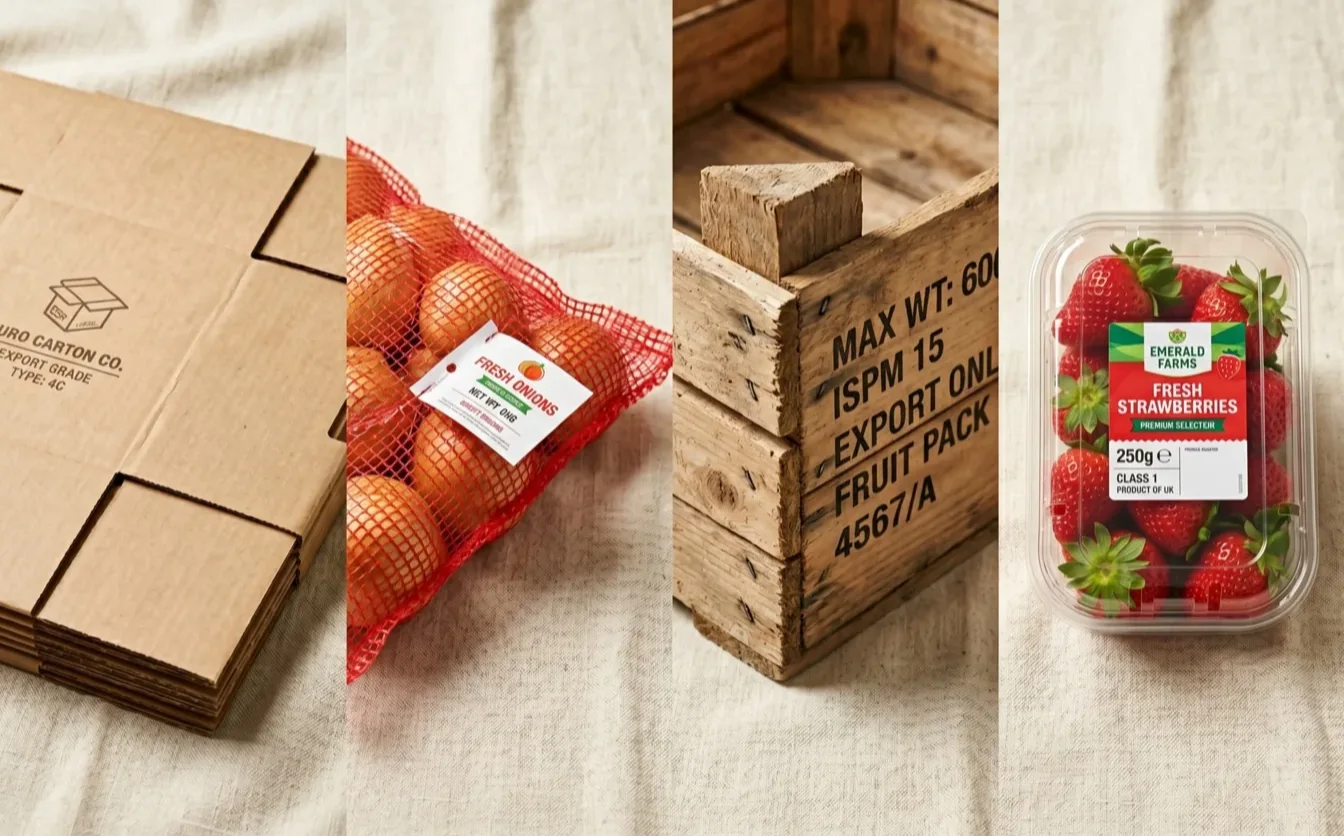
Fresh Produce Export Packaging: Carton, Mesh, Bin, or Punnet?
The right packaging format saves freight cost, protects shelf life, and meets retailer specifications. The wrong one creates claims. Here's how to pick — by product, by destination, by program type.
Read article →