
Coordinating Mixed Container Shipments: How It Works in Practice
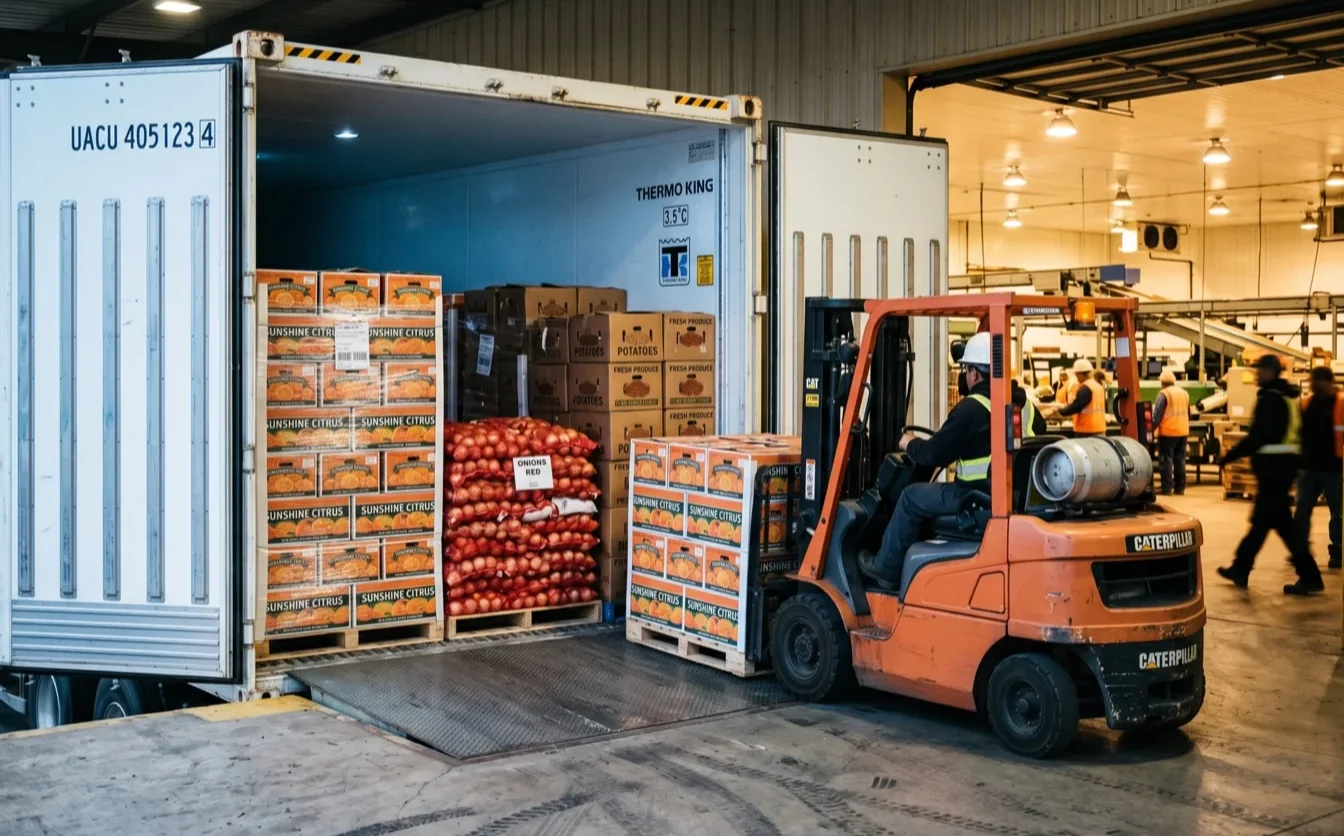
A standard 20-foot reefer container holds roughly 24 to 28 cubic metres of produce. For buyers running diverse product programs, filling an entire container with one product every week is not always feasible. Mixed containers solve this by combining compatible products in a single shipment.
Temperature Compatibility Is Non-Negotiable
Every product in a mixed container must tolerate the same storage temperature. This is the first and hardest constraint. Common compatible groupings:
**0 to 2 °C:** Artichokes, broccoli, cauliflower, lettuce, green beans. Cold-tolerant vegetables sit together easily.
**5 to 8 °C:** Citrus — oranges, lemons, grapefruit, mandarins. Citrus travels together well.
**10 to 13 °C:** Mangoes, avocados, capsicums, cucumbers. These chilling-sensitive products need warmer containers. Do not mix them with cold-tolerant vegetables.
Never mix ethylene-producing products (mangoes, avocados) with ethylene-sensitive products (broccoli, cauliflower, lettuce) in the same container. Ethylene accelerates yellowing and premature ripening — a small volume of mangoes can ruin a load of broccoli over 14 days.
Packing and Segregation
Each product in a mixed container must be palletised or stacked separately, clearly labelled by product and lot number. Temperature probes should be placed near the warmest product in the mix. Loading order matters: the product most sensitive to temperature fluctuation should load last, closest to the doors, where temperature swings are most frequent during transshipment.
Documentation
Each product in the container needs its own line item on the commercial invoice, packing list, and certificate of origin. Phytosanitary certificates can cover multiple products on one certificate, but each product must be listed with its correct botanical name. A "fresh vegetables, mixed" description without botanical names is rejected at most major destination ports.
When Mixed Containers Make Sense
Mixed containers make the most economic sense when:
- You are buying complementary products from the same sourcing region in the same week
- Individual product volumes do not fill a container alone
- You want to trial a new product alongside an existing program without committing to a full container
They are not a way to reduce price by mixing premium and budget product lines together. Buyers see the manifest, and combining a premium retail SKU with a wholesale-grade product in the same container raises immediate questions about which one is being sent for which channel.
Interested in sourcing Egyptian produce for your program?
Related articles
EU MRL Compliance for Egyptian Fresh Produce: A Practical Guide
Egyptian shipments rejected at EU ports almost always trace back to one of three pesticide residues. Here's what to test for, why border rejections happen, and how to keep retail programs alive.
Read article →
Sourcing Egyptian Potatoes for European Retail Programs
Egypt produces over six million tonnes of potatoes a year. Not all of it is retail-ready. Here's what buyers sourcing for EU supermarkets need to know about varieties, sizing, and timing.
Read article →