
Cold Chain Planning for Egyptian Fresh Produce Exports
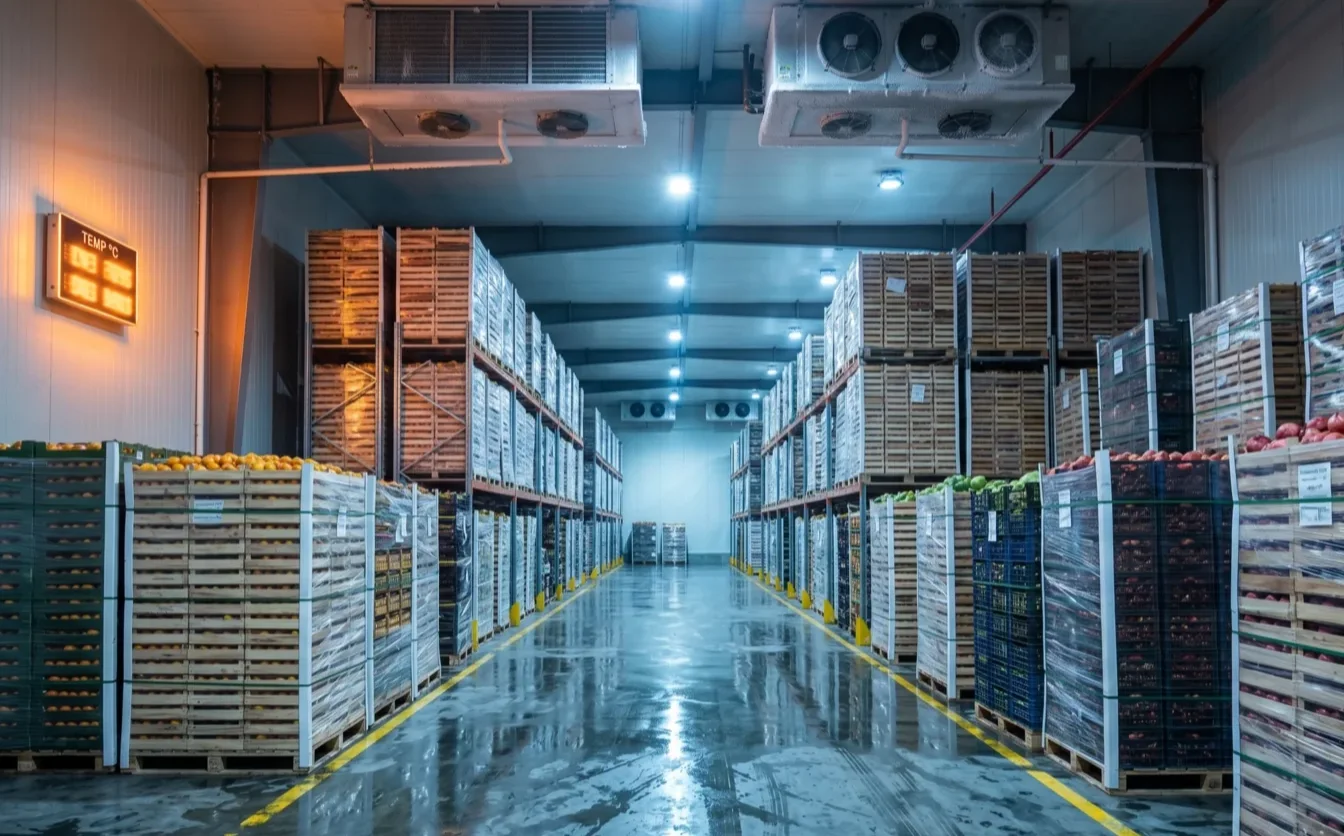
Cold chain is the continuous temperature-controlled handling of perishable produce from harvest to receipt. For Egyptian exports moving 12–16 days by sea to Northern Europe, even a short break in temperature control can compress shelf life by a week or more on arrival.
Most buyers think cold chain failures happen during transit. They usually don't. The riskiest part of the chain is the first three hours after harvest, when field heat compounds and the cell respiration rate is at its peak.
The Five Stages
**Pre-cooling** removes field heat as fast as possible after harvest. Hydrocooling for leafy vegetables and broccoli, forced-air cooling for stone fruit and tomatoes, room cooling for citrus and onions. The target is to drop pulp temperature to within 2 °C of storage temperature within four to six hours.
**Cold storage** holds the product at the target temperature until container loading. Storage facilities should run a single set-point with humidity control appropriate to the product (high humidity for leafy crops, lower for cured alliums).
**Loading** is where preventable mistakes happen. The reefer container should be pre-cooled to set-point before loading begins, the floor should be clean, and air-flow channels (the corrugated grooves in the floor) should not be blocked by pallet wraps. Stacking patterns must allow chimney air movement front to back.
**Transit** is the part most monitored and least controllable. A correctly loaded container with a working refer unit holds temperature reliably across a Mediterranean route. Modern reefers report temperature data every six minutes via shipping line dashboards.
**Delivery** is the buyer's responsibility but worth confirming. Even a 30-minute delay in unloading at destination, with the container running but the doors open in 28 °C ambient, undoes a week of careful chain management.
Temperature Targets by Product Group
These are operational set-points for pulp temperature, not container set-points (which run 1–2 °C lower to compensate for cargo respiration heat).
- Leafy vegetables, broccoli, cauliflower, green beans: 0–2 °C
- Citrus (oranges, lemons, mandarins, grapefruit): 5–8 °C
- Stone fruit, table grapes: -0.5 to 0 °C
- Mangoes, avocados, pomegranates, cucumbers, capsicums: 10–13 °C
- Potatoes (cured): 4–8 °C
- Onions, garlic (cured): 0 °C with low humidity
Mixing products with incompatible temperature requirements in the same reefer is the most common loading-stage failure. It produces partial chilling injury on the warmer-loving products and accelerated senescence on the colder-loving products in the same load.
What Goes Wrong, and How to Catch It
Three failures account for most claims:
Delayed pre-cooling. A four-hour delay between harvest and pre-cooling on a hot August day in the Delta can take a tonne of green beans from a 10-day shelf life to a four-day shelf life on arrival.
Overloading. Reefer containers have a published payload ceiling (usually 25–28 tonnes for a 40-foot reefer), but they also have an air-flow ceiling. Stacking pallets too high or wrapping them with non-perforated film blocks the chimney effect and creates warm pockets above the floor channels.
Door openings during transshipment. Each door opening at a transshipment hub costs the cold chain. For routes that transship at Algeciras or Tanger Med, ask your shipping line for a non-transshipment direct service if available — the premium is worth it for premium product.
Data Loggers Are Cheap Insurance
Add a recording temperature data logger to every shipment, ideally one that uploads on arrival via Bluetooth or USB. The logger gives you and the buyer a defensible record of the chain. When a claim comes in, the logger settles 80% of the dispute in the first phone call.
For air freight shipments, use temperature loggers rated for the air-cargo environment — they are more sensitive than reefer-grade loggers and capture the brief but high-amplitude temperature swings that air cargo experiences during ground handling.
Interested in sourcing Egyptian produce for your program?
Related articles
EU MRL Compliance for Egyptian Fresh Produce: A Practical Guide
Egyptian shipments rejected at EU ports almost always trace back to one of three pesticide residues. Here's what to test for, why border rejections happen, and how to keep retail programs alive.
Read article →
Sourcing Egyptian Potatoes for European Retail Programs
Egypt produces over six million tonnes of potatoes a year. Not all of it is retail-ready. Here's what buyers sourcing for EU supermarkets need to know about varieties, sizing, and timing.
Read article →