
Air Freight vs Reefer Sea Freight: When Each Makes Sense
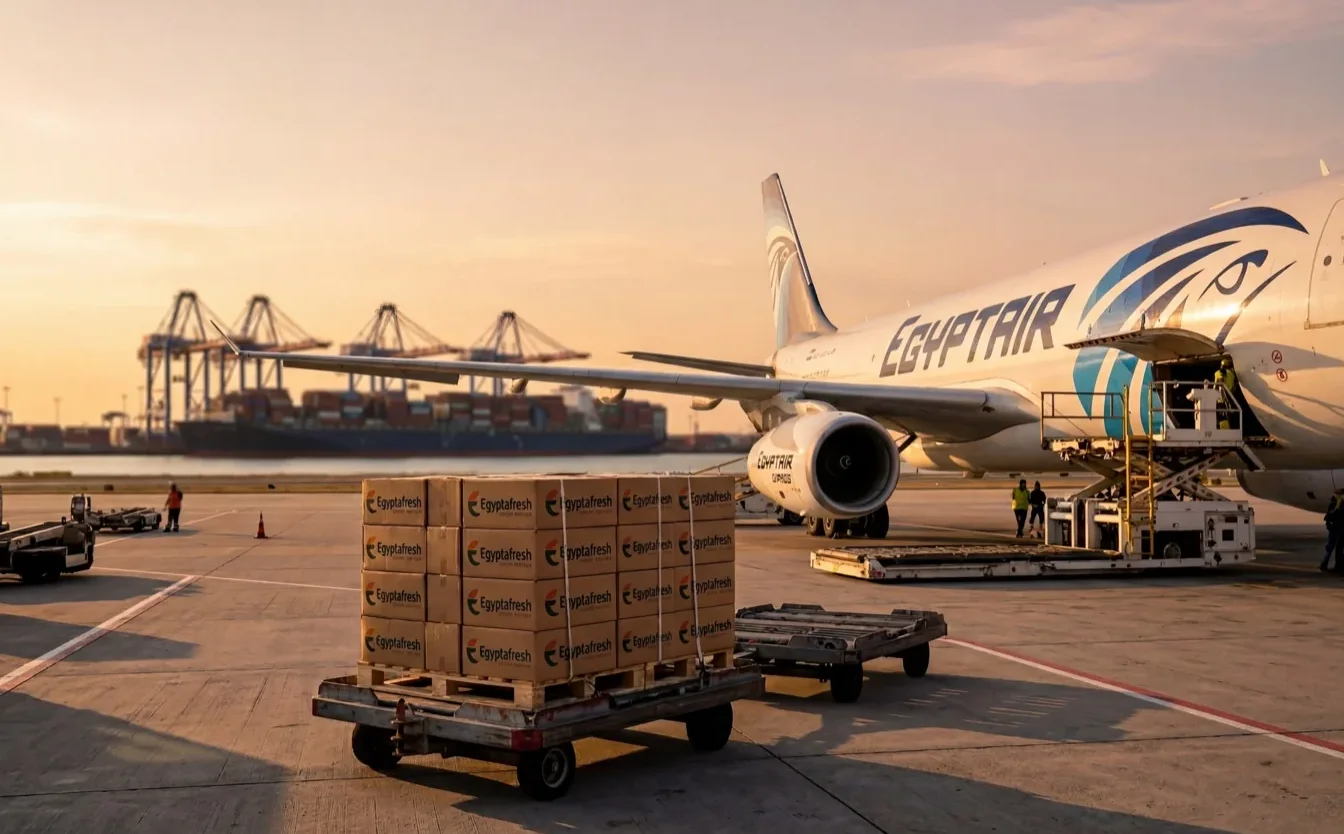
The choice between air freight and reefer sea freight is usually framed as a cost question. That is the wrong frame. The right question is: what is the shelf life of the product after arrival, and does it justify the mode?
When Sea Freight Works
Sea freight is the standard for most Egyptian exports: citrus, potatoes, onions, pomegranates, dates, and other products with shelf lives measured in weeks rather than days. A 20ft reefer from Alexandria to Rotterdam carries roughly 20 tonnes at a freight cost that makes FOB pricing competitive with other Mediterranean and Southern Hemisphere origins.
For these products, sea freight gives you time. A navel orange with a 10–12 week potential shelf life can sit on a vessel for 14 days without material quality loss, provided the cold chain is maintained correctly.
When Air Freight Is the Right Call
Fine green beans are the most obvious example. Egypt is Europe's primary winter supplier of fine and extra-fine beans. At 2 to 3 days of viable shelf life post-arrival for retail-ready product, sea freight is not viable for premium programs. Air freight from Cairo to Amsterdam or Frankfurt takes 24 to 36 hours and delivers product that is still firm and retail-ready on arrival.
Strawberries — Egypt's late-winter crop (February to April) — follow the same logic for premium retail programs. Fresh okra, fresh herbs, and baby vegetables are other examples where air freight is commercially justified.
The calculation: if a box of fine beans retails for €4.50 and weighs 250 g, air freight at €4 to 6 per kilo adds €1.00 to €1.50 to the landed cost per box. If that keeps the product 3 to 4 days fresher than a sea-freight competitor, most EU retailers will pay the premium.
Mixed-Mode Programs
For buyers running large programs on products with borderline shelf lives, some suppliers split volume between modes: sea freight for the core tonnage, air freight for the first and last weeks of the season when sea-freight timing is tightest. This is common for Egyptian strawberry programs shipping to the UK in February.
Discuss mode strategy before the season opens, not during it. Changing logistics mid-season is expensive and disruptive — air-freight capacity has to be booked weeks ahead at peak periods, and reefer-vessel slots are not always available on short notice.
Interested in sourcing Egyptian produce for your program?
Related articles
EU MRL Compliance for Egyptian Fresh Produce: A Practical Guide
Egyptian shipments rejected at EU ports almost always trace back to one of three pesticide residues. Here's what to test for, why border rejections happen, and how to keep retail programs alive.
Read article →
Sourcing Egyptian Potatoes for European Retail Programs
Egypt produces over six million tonnes of potatoes a year. Not all of it is retail-ready. Here's what buyers sourcing for EU supermarkets need to know about varieties, sizing, and timing.
Read article →